

破砕装置Mingyuan Dry and Wet Ball Mill
Customerizable Model for ball mill plant


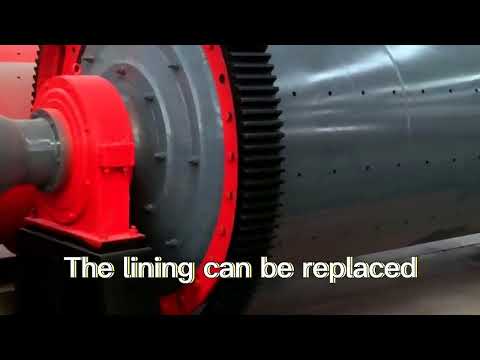


機械に関するデータ
価格と所在地
- 所在地:
- Dahuangye Industrial zone, XinXing East RD, Gongyi, 451200 Zhengzhou, China
オファーの詳細
- 広告ID:
- A14536393
- 更新:
- 最終更新日:08.03.2026
説明
Gedpfoq Nx Alox Aqtjud
A ball mill is a fundamental grinding device used in mineral processing, cement manufacturing, chemical production, and other industrial applications. It works by rotating a cylindrical shell filled with grinding media—usually steel balls—causing impact and friction that reduce materials to fine powder. Based on the grinding environment, ball mills are classified into dry and wet types, each suited for specific materials and process requirements.
Working Principle
Both dry and wet ball mills operate on the same mechanical principle. The rotating cylinder, driven by a motor through a gear system, lifts the grinding media and material along the inner wall. As the rotation continues, the balls fall under gravity, striking and grinding the material. The difference lies in the presence or absence of a liquid medium during grinding.
Dry Ball Mill
A dry ball mill is used when the material must remain moisture-free or when water could affect product quality. It is commonly applied in cement clinker, limestone, quartz, and refractory material grinding. The discharge can be either grate type or overflow type, depending on the desired fineness.
Technical Features:
Feeding size: ≤25 mm
Discharge size: 0.075–0.4 mm
Capacity: 0.65–90 t/h
Liner material: High manganese steel or wear-resistant alloy
Drive system: Gear-driven or direct-coupled motor
Dust control: Equipped with air exhaust and dust collector
Advantages:
Suitable for materials sensitive to moisture
No drying process required after grinding
Lower corrosion risk and simpler maintenance
Easier material classification and separation
Limitations:
Dry grinding produces more dust and heat, requiring efficient ventilation and dust collection systems.
Wet Ball Mill
A wet ball mill operates with water or another liquid medium added to the material. The slurry formed during grinding improves efficiency by reducing friction and preventing excessive heat buildup. It is widely used in ore beneficiation, ceramics, and chemical industries.
Technical Features:
Feeding size: ≤25 mm
Discharge size: 0.074–0.2 mm
Capacity: 0.65–615 t/h
Liner material: Rubber or high-chromium steel
Discharge method: Overflow or grate type
Auxiliary equipment: Classifier, pump, and thickener for slurry circulation
Advantages:
Higher grinding efficiency and finer particle size
Reduced dust and noise levels
Continuous operation suitable for beneficiation circuits
Better control of particle uniformity
Limitations:
Requires drying if the final product must be in powder form and involves more complex slurry handling.
The selection between dry and wet grinding depends on the material characteristics, downstream process, and environmental conditions. Dry mills are preferred for materials that must stay moisture-free, while wet mills are ideal for fine grinding and slurry-based processes.
Conclusion
Dry and wet ball mills share the same mechanical structure but differ in their grinding environment and application scope. The dry type offers simplicity and low maintenance for moisture-sensitive materials, while the wet type provides higher efficiency and finer output for mineral and chemical processing. Understanding their technical parameters and operational differences ensures optimal equipment selection, improved productivity, and reliable performance in industrial grinding operations.
提供者
登録日: 2024
50 オンライン広告

お問い合わせを送信
電話 & ファックス
 Schorfheide
 Sonstige/OtherGasparin Backenbrechanlage GI107CV VESUVIO
 Fevziçakmak
 TFON MACHINE CO.Leveling Machine - TF-S 3513


 Zheng Zhou Shi
 Fine powder grinding mill, clinker millSuperfine ball mill for micro powder


 Fuldatal


 Ursberg
 die magnetprofis2023011201


 Zheng Zhou Shi
 Rod ball mill / Rod Grinding MillFor Sand and mining beneficiation plant


 Zaleszany
 PGCNC3060ATC 5X


 Zheng Zhou Shi
 Construction waste recycling machineConstruction&demolition management


 Zheng Zhou Shi
 Double roller crusher /roller sand makerStationary&portable sand crushing plant


 Misterton
 VMIHigh shear mixing vessel

Machineseeker信頼の証
信頼のシールとは何ですか?
Machineseeker は、選ばれた販売店に Machineseeker 信頼シールを認定しています。 発行前に、経験豊富なMachineseekerのスタッフが標準化された包括的な検査を行います。
私たちは何を検査しますか?

営業許可証または商業登記簿抄本の確認
販売者の
郵送先住所の確認
銀行接続の検証
主番号の
電話による
接続可能性の確認
経済情報
には否定的な特徴が含まれていてはなりません
購入者からの苦情
は認証の剥奪につながる可能性がありますこれは購入者としてあなたにとって何を意味しますか?
Machineseekerの信頼シールにより、購入者として自身で確認しなくても、非常に高い確率で誠実かつ公正な取引をしている信頼できるディーラーを見分けることができます。
もちろん、購入プロセス中に意見の相違が生じることもあります。 Machineseekerは、Machineseeker上のアクティブな購入者または販売者による法令違反について責任を負いません。